
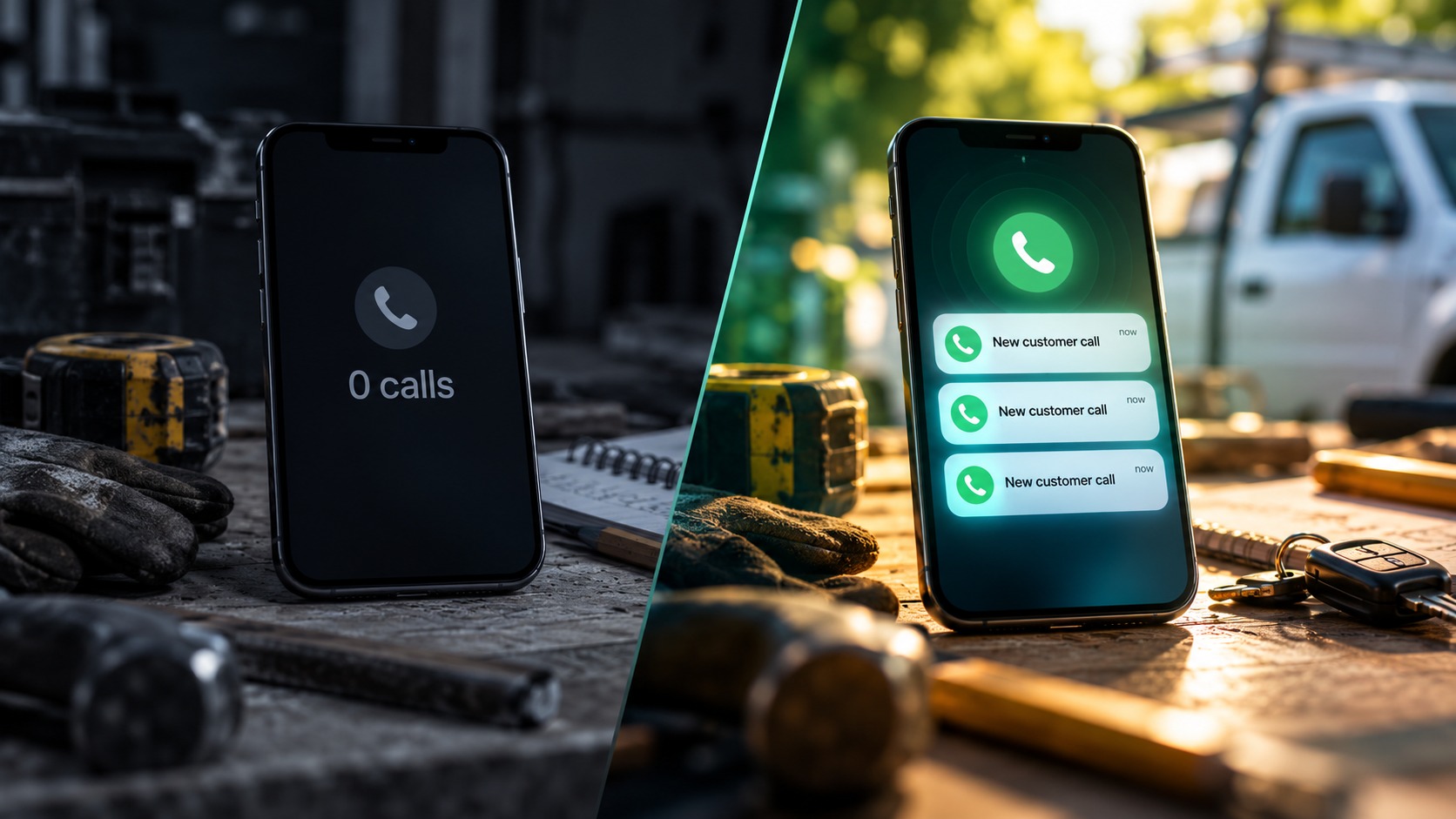
You do great work. You show up on time. Your customers love you.
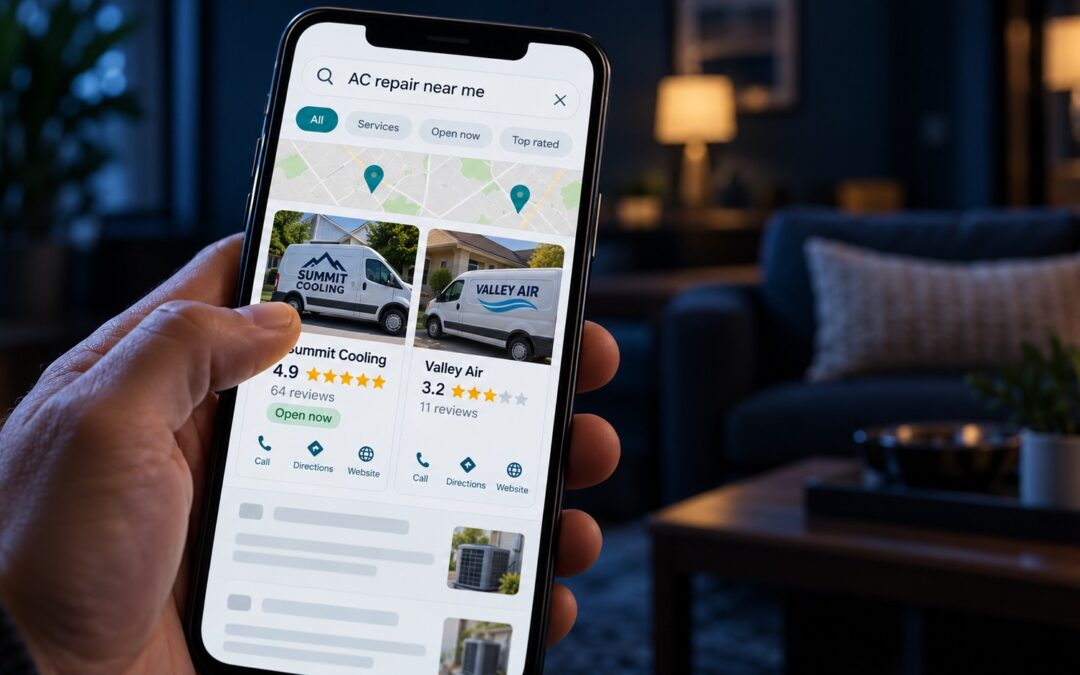
But when a homeowner in your service area types “plumber near me” into Google at 9pm on a Tuesday, your name doesn’t come up.
Someone else gets the call. And you never knew the lead existed.
This is the most common revenue leak we see in home service businesses — and it’s almost entirely invisible. You can’t feel it. You can’t count it. You just quietly lose work to competitors who figured out local SEO before you did.
Here’s what’s actually going on, and what you can do about it.
What “Local SEO” Actually Means for Contractors
Local SEO isn’t about ranking #1 in the whole country for “air conditioning repair.” That’s a waste of time and money for a service-area business.
Local SEO is about one thing: showing up when someone in your service area searches for what you do, right now, on their phone.
That means three separate systems have to be working:
1. Google Business Profile (GBP)
This is the listing that shows up with the map and star ratings. It’s the single highest-leverage thing a home service company can optimize. Most contractors either haven’t claimed theirs, haven’t filled it out completely, or let it go stale.
2. Your Website
Google needs to confirm you’re a real business that actually serves the area it shows you for. That happens through your website — the content on your service pages, the location signals in your code, and whether your site loads fast on mobile.
3. Citations and Reviews
Your business name, address, and phone number (NAP) needs to appear consistently across the web — Yelp, HomeAdvisor, Angi, BBB, and dozens of other directories. Inconsistencies confuse Google and hurt your rankings.
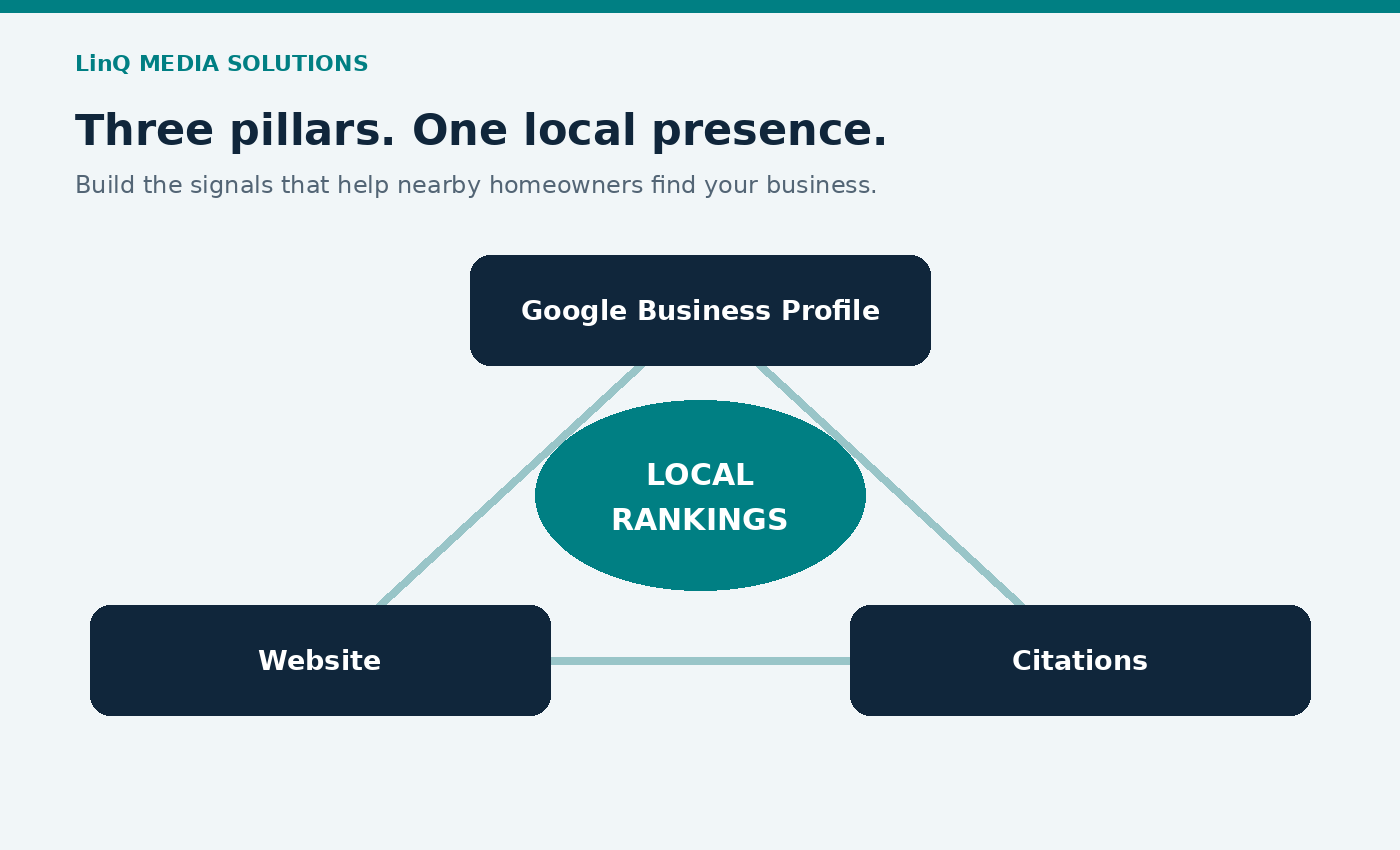
Most contractors are missing at least one of these. Many are missing all three.
The Five Biggest Local SEO Mistakes Home Service Contractors Make
1. Your Google Business Profile Is Incomplete
An incomplete GBP is almost as bad as no GBP. Google rewards businesses that fill out every section — categories, services, service area, hours, photos, posts.
The biggest missed opportunity: photos. GBP listings with photos get 42% more direction requests and 35% more website clicks. Most contractors upload one blurry photo from three years ago and call it done.
What to do: Log into your Google Business Profile. Add at minimum: your primary service category, all secondary categories that apply, your full service area (zip codes or cities, not just one city), at least 10 photos of your work and your truck, and your business hours including holiday hours.
2. Your Website Has No Location Pages
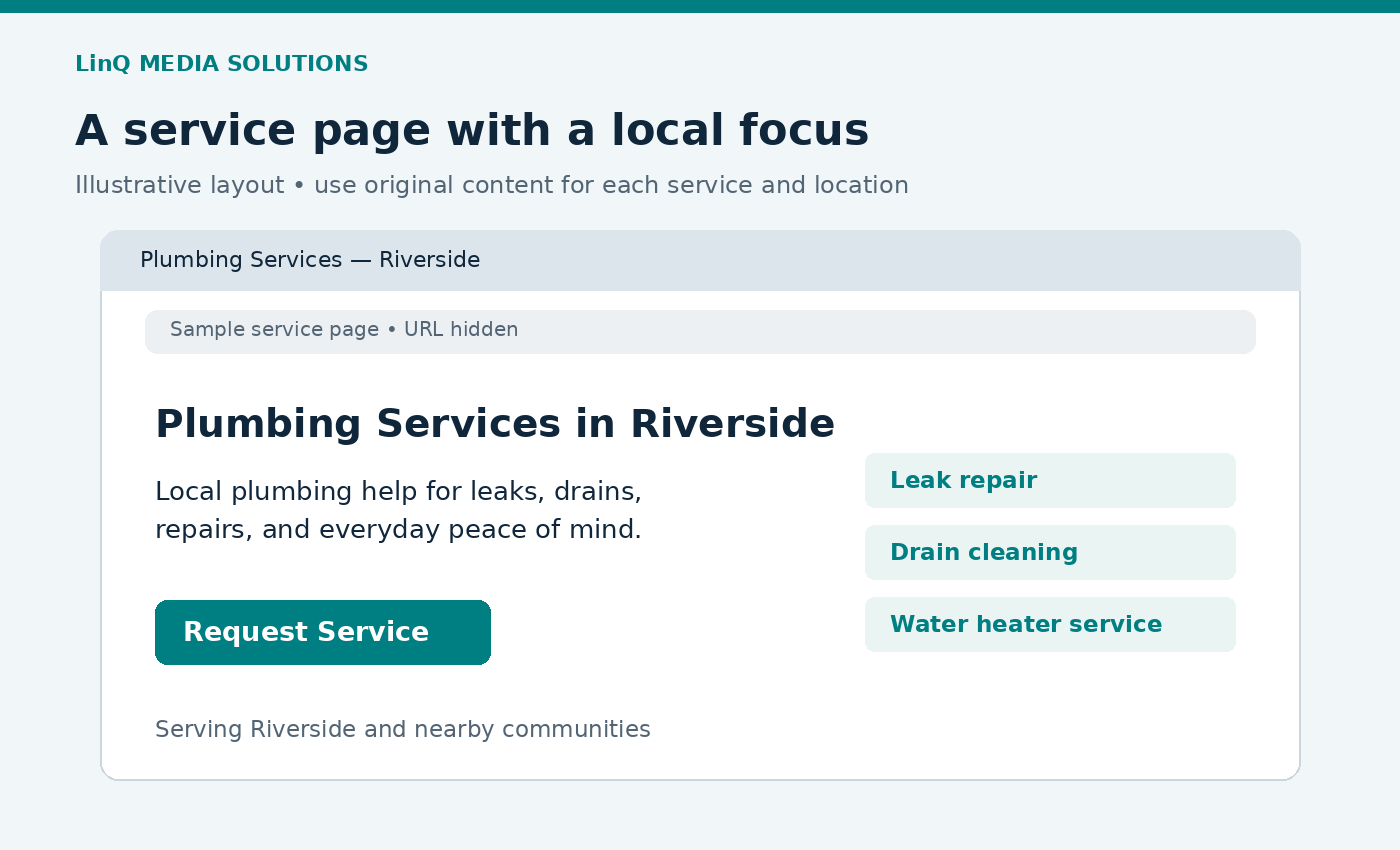
A single homepage that says “We serve the Inland Empire” is not enough. Google wants to see dedicated pages for each service type and service area you actually cover.
A roofing company serving five cities needs five location pages. A plumber offering four services needs service pages for each one. This is how you rank for “plumber in [specific city]” instead of hoping your homepage catches everything.
What to do: Audit your current service pages. If you have one generic “Services” page, break it into individual pages — one per service. Each page should be at least 500 words and reference the specific cities you serve.
3. Your NAP Information Is Inconsistent
If your business is listed as “ABC Plumbing” on your website, “ABC Plumbing Co.” on Yelp, and “ABC Plumbing Services” on HomeAdvisor, Google treats those as three different businesses and trusts none of them.
This is more common than you’d think — especially if you’ve changed your business name, moved locations, or updated your phone number at any point.
What to do: Search your exact business name on Google. Check the top 10 directory sites where you appear. Make sure the name, address, and phone number match exactly — punctuation and all.
4. You’re Not Getting Enough Reviews (Or Responding to Them)
Reviews are a ranking factor. More importantly, they’re a conversion factor — a homeowner choosing between you and a competitor will almost always pick the one with more recent reviews.
The average home service business gets a burst of reviews when they first launch, then the flow completely stops. Customers are happy, but they’re not leaving reviews because nobody asked them to.
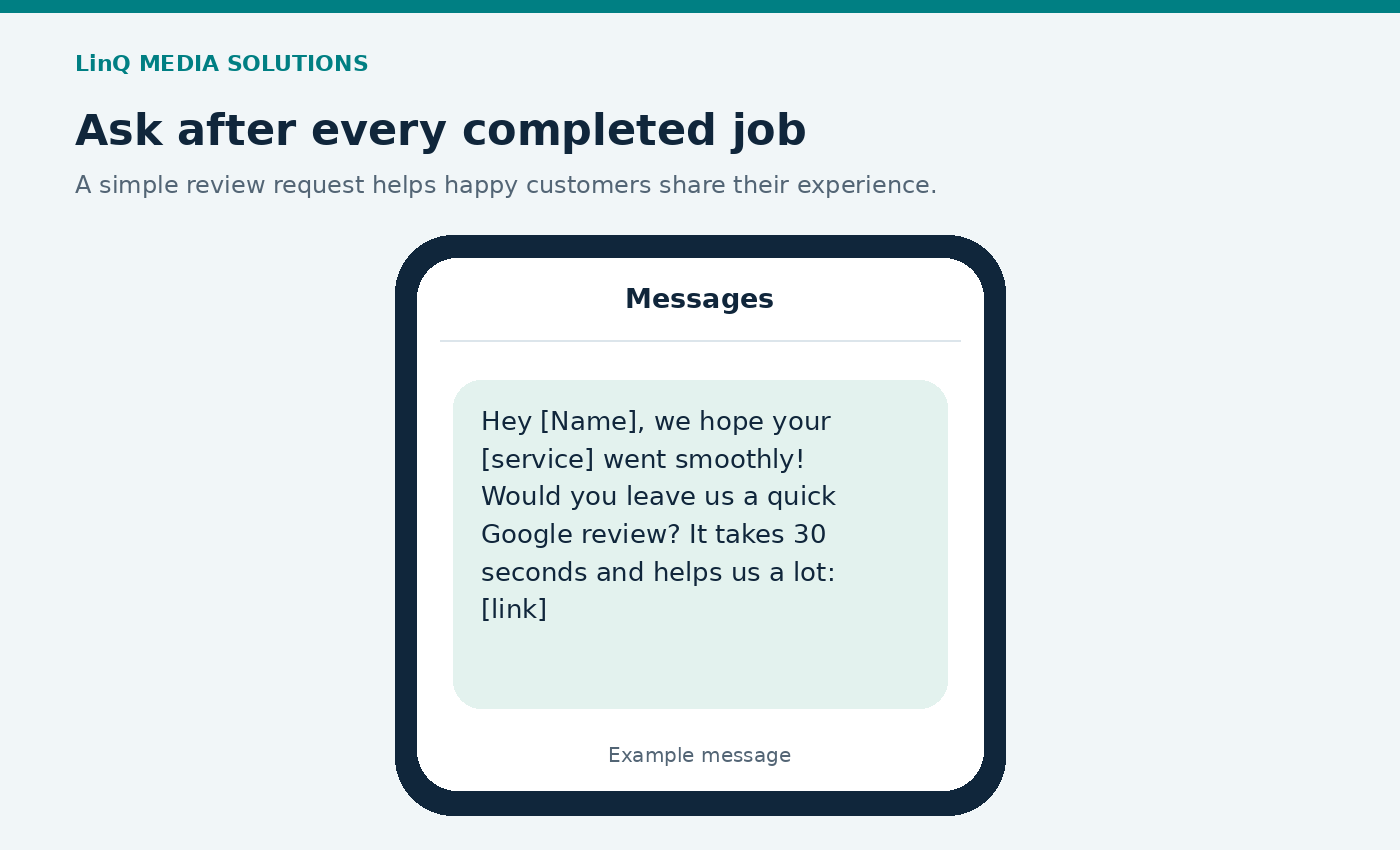
What to do: Build a review request into your follow-up process. After every completed job, send a text with a direct link to your Google review page. Not an email — a text. Response rates are dramatically higher.
5. Your Site Loads Too Slow on Mobile
Over 70% of local service searches happen on mobile. If your site takes more than 3 seconds to load, most visitors leave before they ever read a word — and Google knows it.
Slow sites rank lower. It’s that direct.
What to do: Go to PageSpeed Insights (pagespeed.web.dev), type in your website URL, and run the Mobile test. If your score is below 70, slow load speed is actively costing you leads.
What Good Local SEO Looks Like in Practice
A tree service company in Riverside County we worked with had been in business for 11 years. Solid reputation, zero online presence.
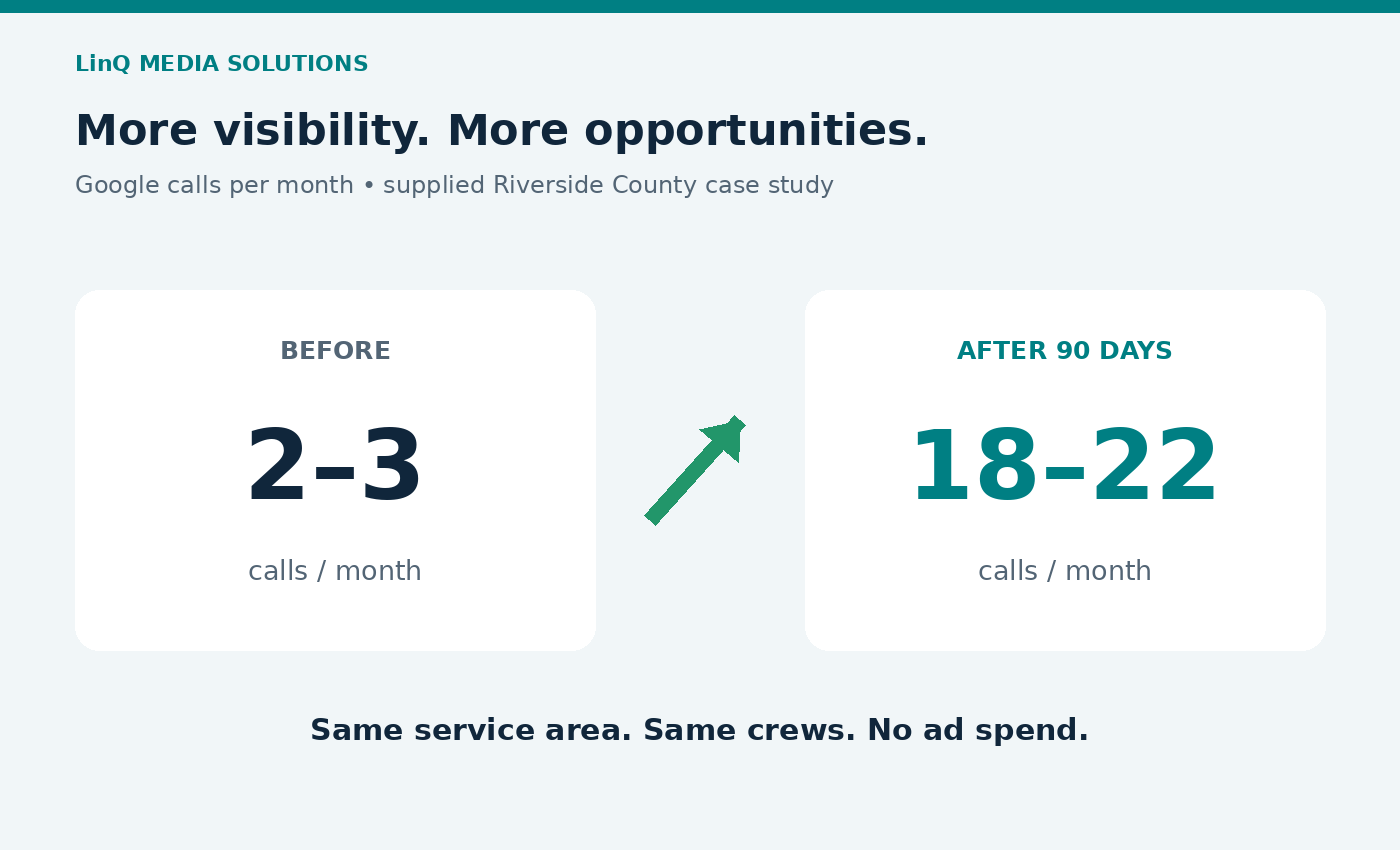
Within 90 days of fixing their GBP, building out service pages, and cleaning up their citations, they went from getting 2–3 calls a month from Google to 18–22 calls a month.
Same service area. Same crews. No ad spend. The calls were always there — they just weren’t findable.
The Local SEO Checklist for Home Service Contractors
- Google Business Profile claimed and fully filled out
- Primary and secondary categories set correctly
- Service area includes all cities you actually serve
- Minimum 10 photos uploaded (work photos + team + truck)
- Website has individual pages for each service
- Each service page mentions the specific cities served
- Business name, address, and phone match across all directory listings
- You have a system to request reviews after every completed job
- Site loads in under 3 seconds on mobile (check PageSpeed Insights)
If you’re missing more than two of these, local SEO is your single highest-ROI fix right now — before social media, before Google Ads, before anything else.
What’s Next
Local SEO is the foundation. Once it’s working, you stop bleeding leads to competitors just because they showed up in search and you didn’t.
If you want to know exactly where your business stands on all of this, we offer a free revenue leak audit for home service contractors in the Inland Empire. We’ll tell you specifically what’s costing you calls — and what it would take to fix it.
LinQ Media Solutions builds revenue-leak marketing systems for home service contractors in the Inland Empire. We find what’s losing you calls, fix it, and put systems in place so it doesn’t happen again.



0 Comments