
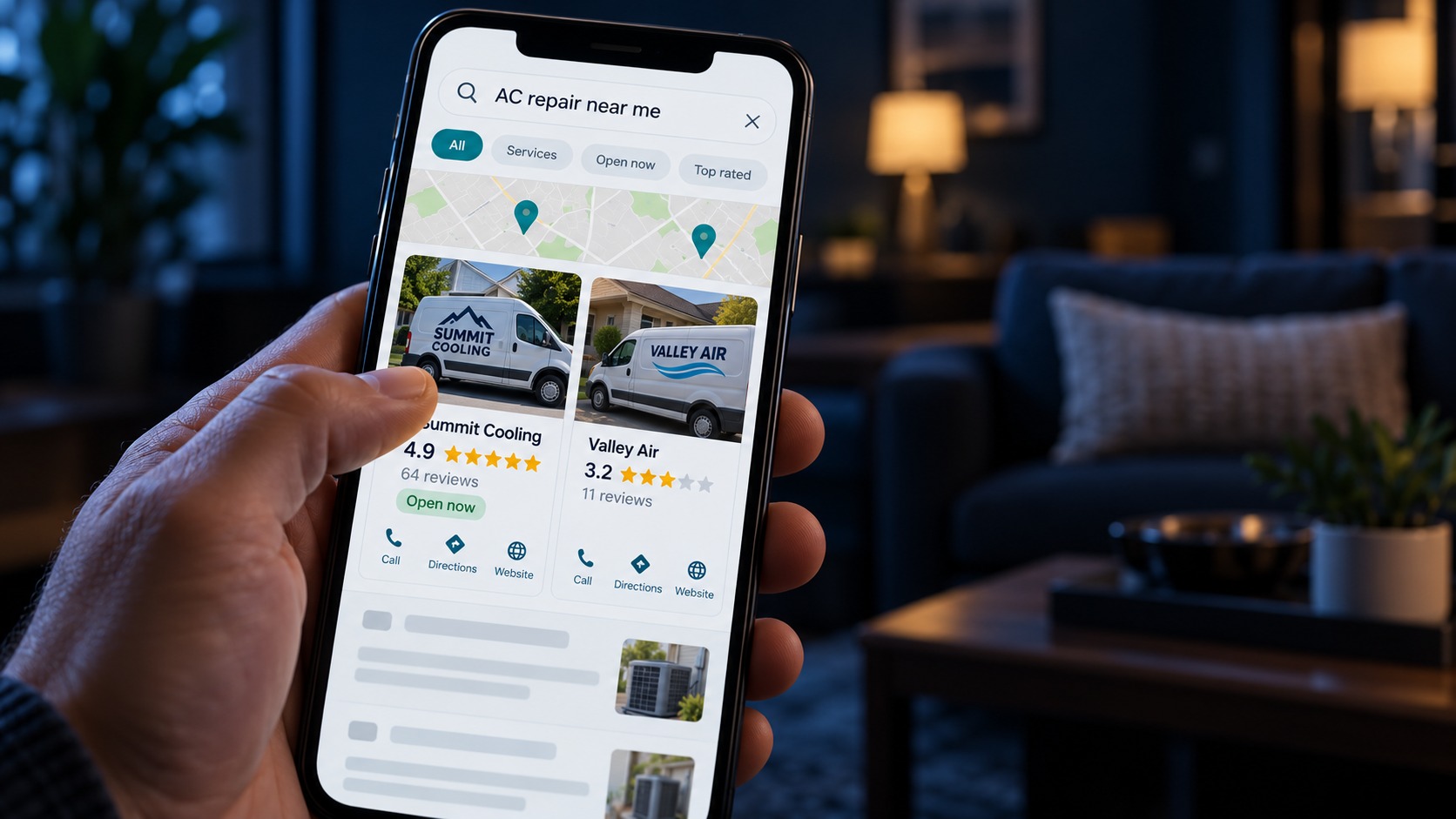
A homeowner’s AC goes out on a Friday afternoon in August.
She grabs her phone, searches “AC repair near me,” and sees two results. One has 4.9 stars and 64 reviews. The other has 3.2 stars and 11 reviews.
She calls the first one.
The second contractor might do better work. Might be cheaper. Might have been in business longer. Doesn’t matter — she never gave them a chance to find out.
This happens across your service area. And most contractors have no idea how many jobs they’re losing because of it.
Your Online Reputation Is Your First Impression Now
Ten years ago, reputation was word-of-mouth. A happy customer told their neighbor. Referrals came in. Business grew slowly and steadily.
That still happens. But online reviews now play a major role in how homeowners compare contractors.
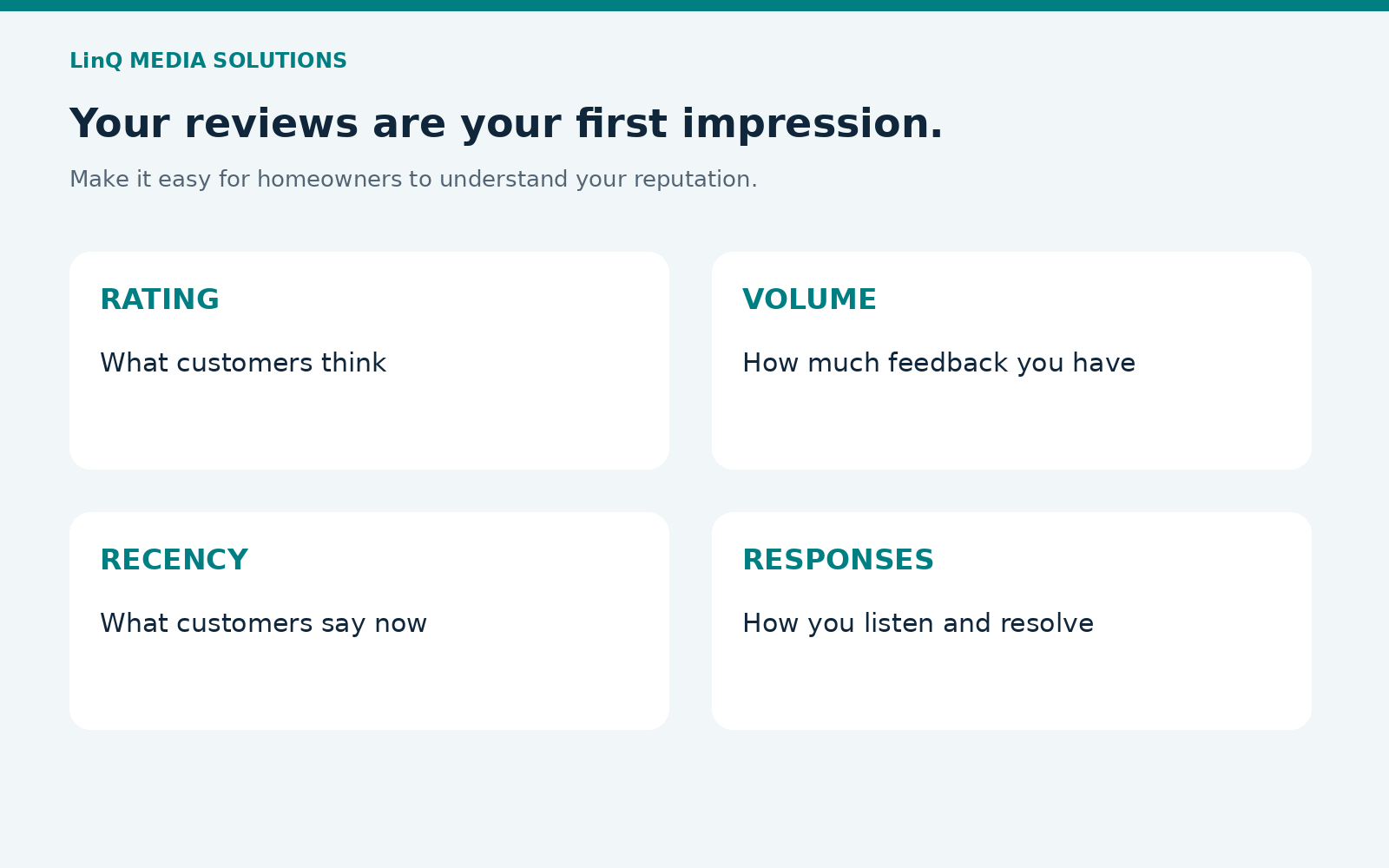
When someone needs a contractor, reviews can help them decide who to call. Star rating, review count, recent feedback, and the way a business responds can shape that decision before they ever read your website or learn about your actual quality of work.
Your reputation isn’t what you say about yourself. It’s what strangers say about you online, visible to every potential customer in your service area.
The Two Reputation Problems Most Contractors Have
Problem 1: Not Enough Reviews
This is a common issue. The contractor does great work, customers are satisfied, but the Google listing shows 9 reviews — some from three years ago.
Why? Because happy customers don’t always leave reviews on their own. They mean to. They forget. Life moves on.
Meanwhile, the one unhappy customer — the one who had a miscommunication about scheduling, or whose gate the tech nicked backing out — may leave a review that same night.
The result: your rating may not reflect your overall quality. It reflects the customers who chose to share their experiences.
Problem 2: Negative Reviews With No Response
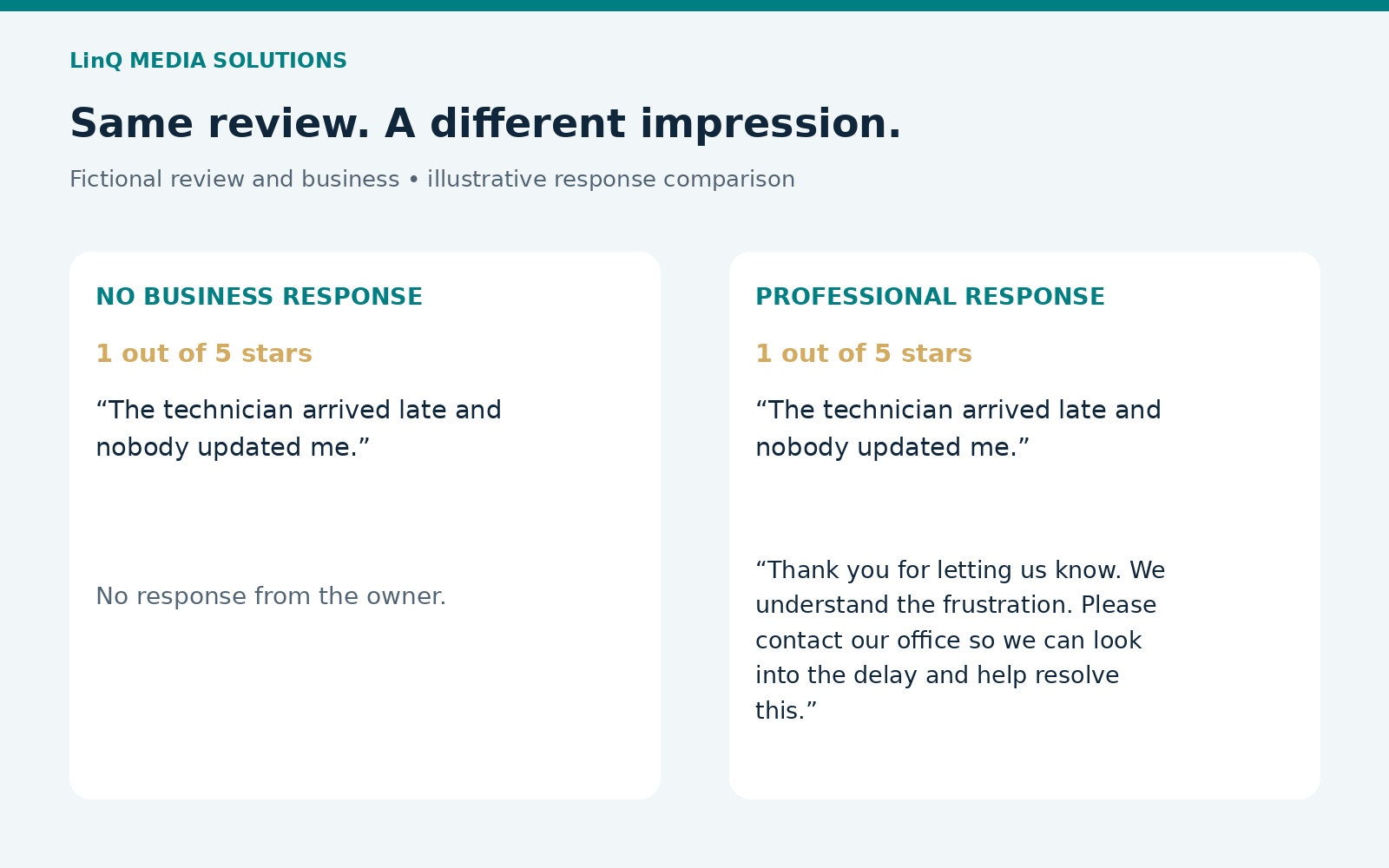
A 1-star review with no response from the business can look like you don’t care. A 1-star review with a professional, measured response shows potential customers how you handle conflict — which can help build trust.
Some contractors ignore negative reviews entirely or respond defensively. Both are missed opportunities.
What a Strong Review Profile Actually Looks Like
Before we talk about how to fix it, let’s define the target:
Volume: Build a meaningful body of genuine Google reviews. Your original target of 25–30 can be a useful starting goal, but compare your profile with nearby competitors rather than treating any number as a universal threshold.
Rating: Aim to earn consistently positive feedback. A 4.5-star rating or higher can be a practical goal, but there is no universal ideal score. A genuine 5.0 rating is not inherently suspicious.
Recency: Keep collecting feedback from recent jobs. Reviews from the last 30–60 days help homeowners understand the experience customers are having now.
Responses: At minimum, respond thoughtfully to negative reviews. Ideally, respond to positive feedback too. This shows customers that you listen; it does not guarantee a ranking improvement.
The Three-Part System That Actually Works
Part 1: Ask Every Single Customer
The biggest leverage point is the simplest: just ask.
A direct, personal request shortly after the job is done makes it easy for customers to share honest feedback while the experience is fresh.
A text message within a couple of hours can be a useful starting point if the customer has agreed to receive texts. Adjust the timing to your workflow and customer preferences.
The message is simple:
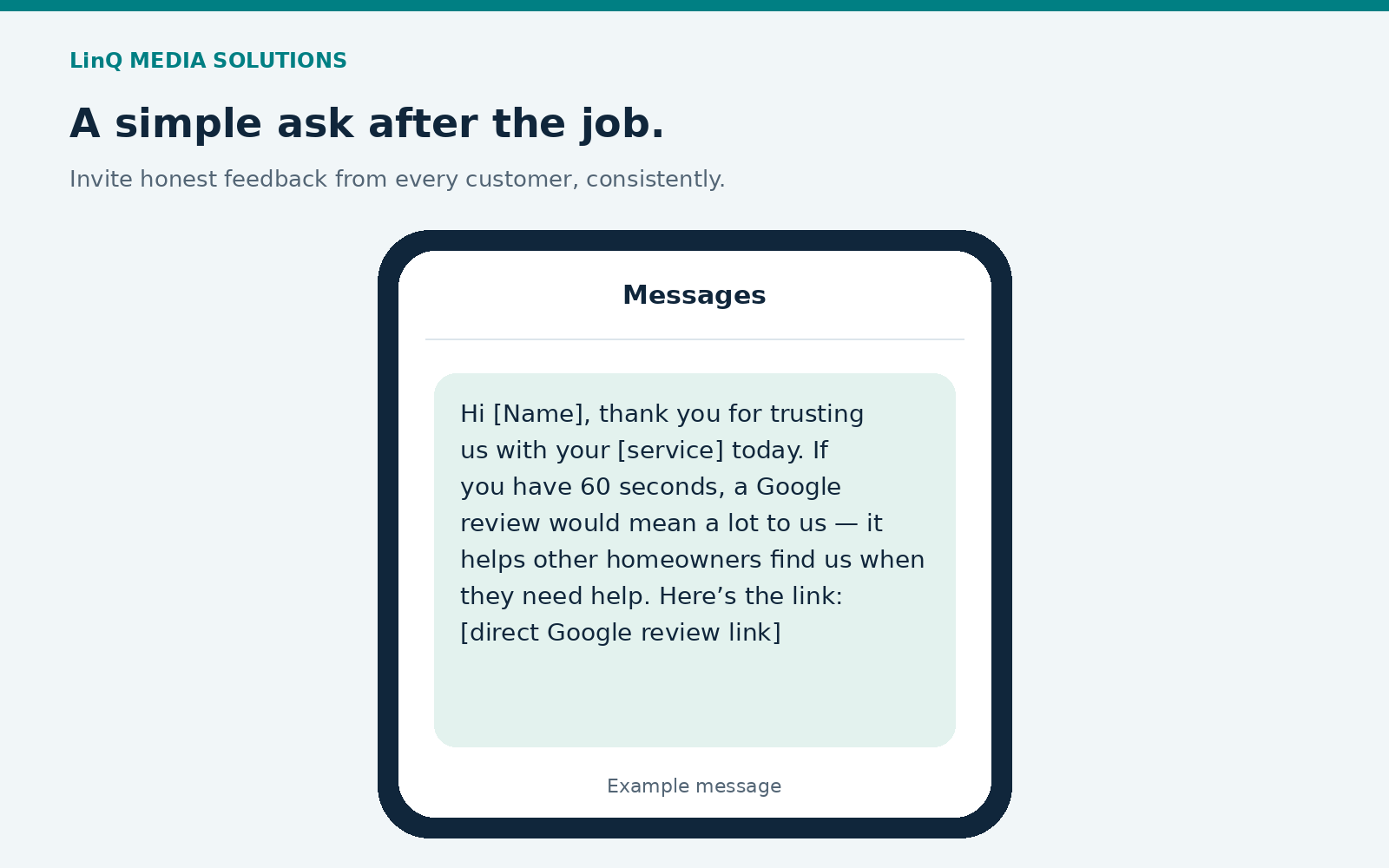
“Hi [Name], thank you for trusting us with your [service] today. If you have 60 seconds, a Google review would mean a lot to us — it helps other homeowners find us when they need help. Here’s the link: [direct Google review link]”
That’s it. Short, personal, direct link. No hoops to jump through.
Ask customers consistently, regardless of whether you expect positive or negative feedback. Don’t offer rewards for reviews or steer unhappy customers away from posting publicly.
Part 2: Make It Automatic
The problem with asking every customer is that it depends on whoever just finished the job remembering to do it — which means it doesn’t happen consistently.
The fix is automation. When a job closes in your CRM or scheduling system, a review request can go out automatically with a timer delay — for example, 90 minutes to 2 hours after close — if your tools support the connection.
This helps keep requests consistent as job volume grows. It does not guarantee that customers will leave reviews or choose a particular rating.
Part 3: Monitor and Respond
Set up Google Business Profile notifications so you’re alerted when a new review comes in. Aim to respond within 24 hours — sooner for negative reviews when possible.
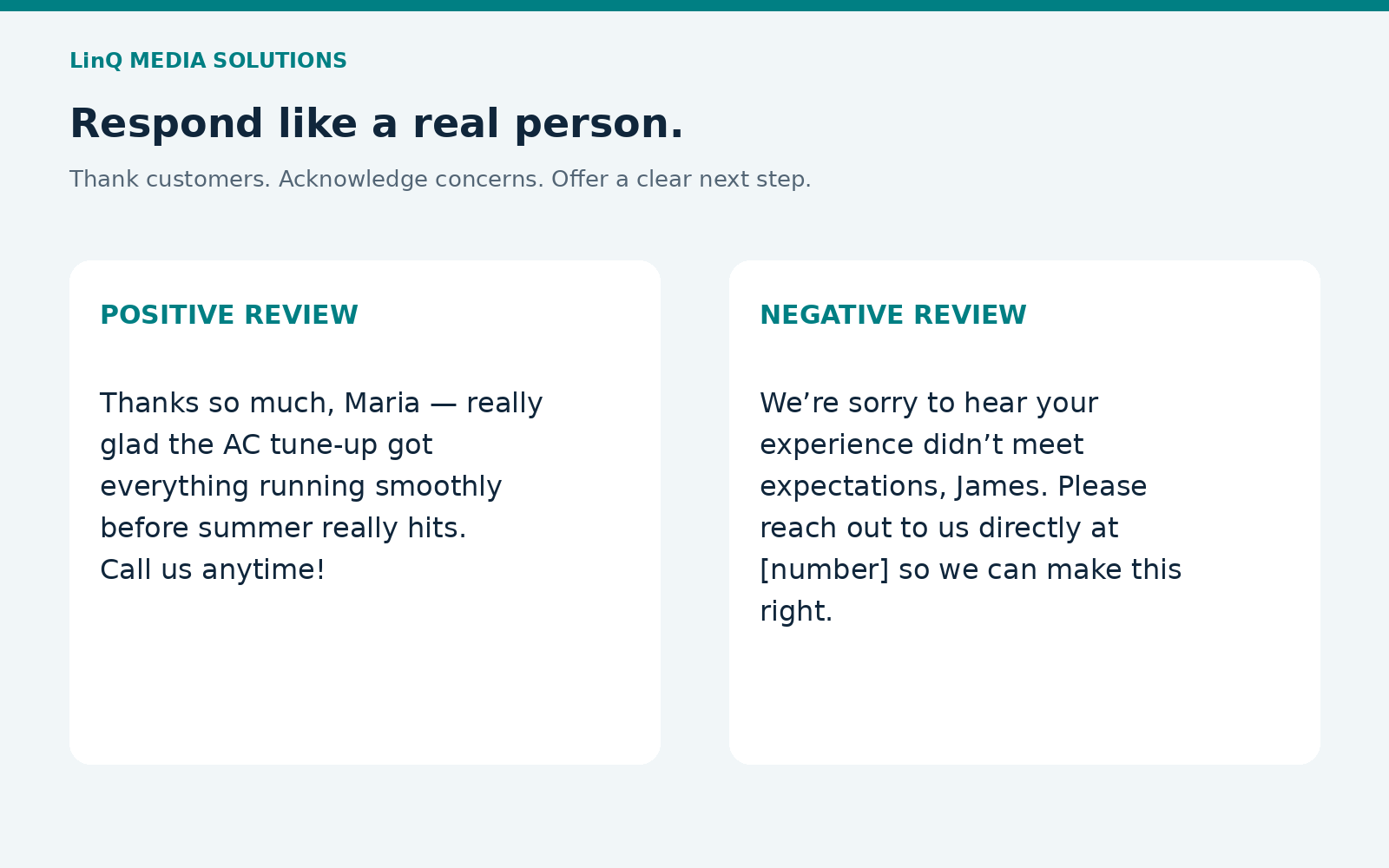
For positive reviews, a brief, genuine thank-you is enough. Use the customer’s name if it’s in the review. Mention the specific service. Avoid a copy-paste template for every response so your replies feel personal and relevant.
For negative reviews:
- Thank them for the feedback
- Acknowledge the concern honestly without arguing or speculating
- Take the resolution offline: provide a business phone number or email
- Never be defensive or dismissive
What Happens When You Do This Consistently
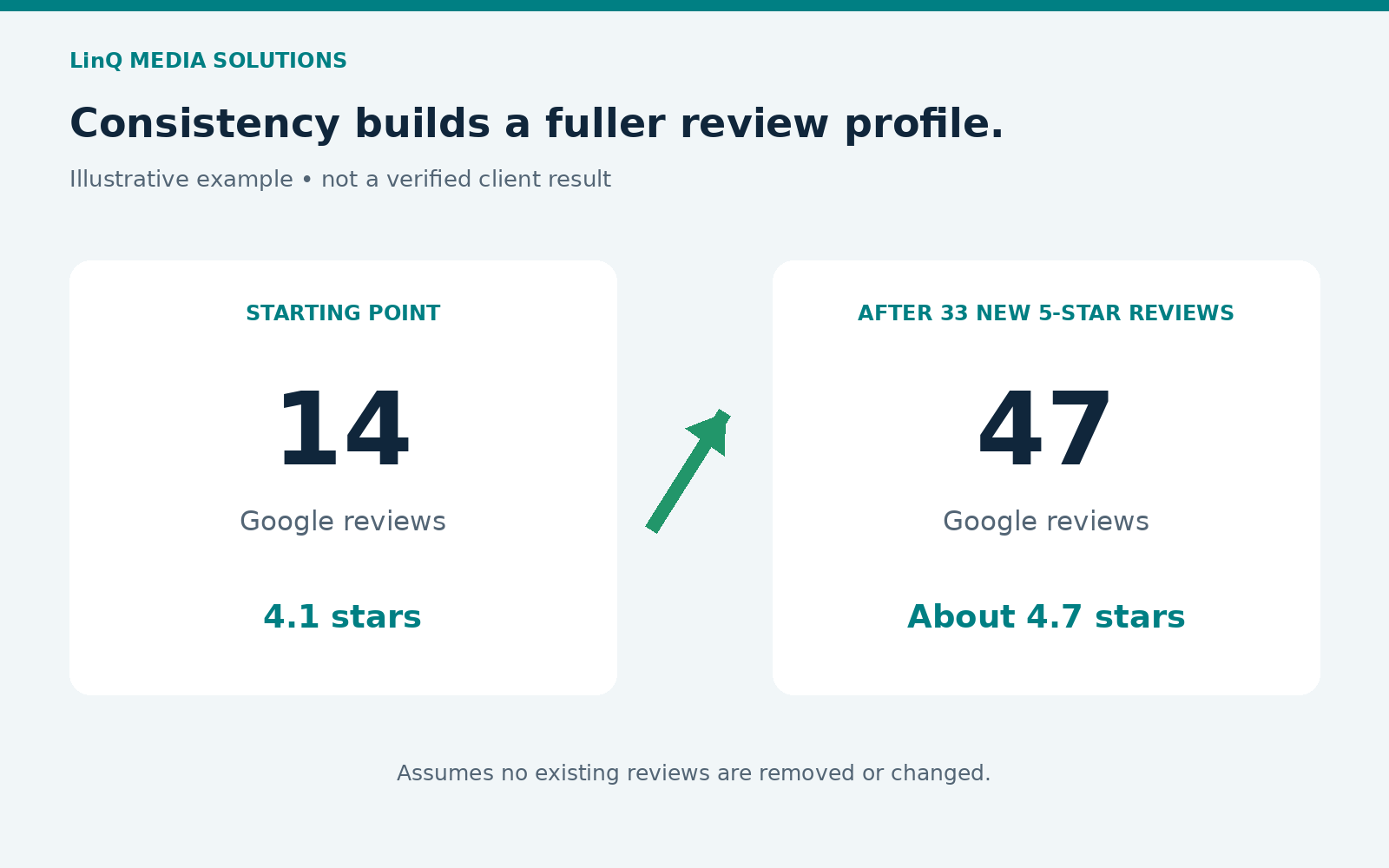
A consistent review process gives more customers an opportunity to share their experience. Over time, it can produce a fuller, more current picture of your business for homeowners comparing contractors.
For example, imagine a garage door company starting with 14 Google reviews averaging 4.1 stars. If 33 more customers each leave a 5-star review, its total would grow to 47 reviews with an average of approximately 4.7 stars, assuming no reviews are removed or changed.
This is an illustration, not a verified LinQ client result. Map positions and call volume depend on many factors, so a higher review count alone cannot promise either outcome.
The opportunity is to make your reputation easier to see — and give homeowners more reasons to consider calling you.
The Tool We Use
We white-label a reputation management platform called Reviewly to support review requests, monitoring, and the response workflow.
Reviewly offers SMS review requests, Google review monitoring, response tools, and integration options. The exact connection to your scheduling software depends on the tools you use and the available integration.
The process should invite honest reviews from all customers on the same basis. You can offer a private way to resolve concerns, but it should never replace or restrict an unhappy customer’s opportunity to leave a public review.
For contractors who want a more consistent review process, automation can reduce manual follow-up and help keep customer feedback from falling through the cracks.
What’s Next
If you want to see where your review profile may be costing you opportunities, start with a free revenue leak audit for your home service business.
LinQ Media Solutions can help you evaluate your review profile, identify gaps in follow-up, and plan a consistent process for collecting and responding to honest customer feedback.
LinQ Media Solutions builds revenue-leak marketing systems for home service contractors in the Inland Empire.





0 Comments