
A homeowner with a problem behaves in a specific way, and once you’ve seen it you can’t unsee it.
They search. They open two or three results. They call the first one. If nobody picks up, they call the next. They keep going until somebody answers, and then — in most cases — they stop.
They are not building a shortlist. They are trying to make the problem go away.
Urgency changes everything about the sale
This is why speed matters more in some parts of your business than others, and it’s worth being precise about which.
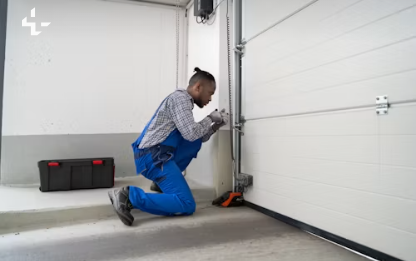
A broken spring, a door off its track, a door that won’t close and won’t leave the house secure — that’s an emergency. The buying decision is made in minutes and it’s decided almost entirely by who responds. Price barely enters into it.
A new door, an insulated upgrade, a second opener — that’s a considered purchase. Days or weeks. Two or three quotes. A conversation with a spouse. Speed still helps, but what wins that one is follow-up, not response time.
Most marketing treats those two as the same job. They aren’t, and a business that’s set up for one is usually leaking the other.
What “fast” actually means
Not five seconds. Nobody answers in five seconds.
It means: does a human — or something that behaves like one — engage with this person before they dial the next number on the list. That’s usually a window of a few minutes, not hours.
Same for forms. A contact form submitted at nine at night and answered at eleven the next morning is a form answered after that homeowner has already booked someone else. The form didn’t fail. The gap did.
Test your own response time
Don’t take anyone’s word for this, including mine. Test it.
Have someone your customers wouldn’t recognise call your main number four times: seven in the morning, midday, five in the afternoon, and Saturday. Have them submit your contact form once, in the evening.
Write down what happened each time. Answered by a person? Voicemail? Rang out? How long until anyone came back?
Five data points, one day of effort, and it will tell you more about where your work is going than any article will. Including this one.
Then fix the worst one
You won’t fix all five gaps at once, and you don’t need to. Fix the worst one.
For most garage door companies that’s either the mid-morning block, when everyone is on a job, or the weekend, when homeowners are home and looking at the door. Those two are where the emergency calls land, and emergency calls are the ones decided purely on who picked up.
The rest can wait. Start where the loss is biggest.
—






0 Comments